MLA Prep · Clinical Presentations

The UKMLA, by presenting complaint.

The exam gives you a symptom and asks for the next step. This series is organised the way patients arrive: 1,993 referenced SBAs and 220 chapters of symptom-first notes with 3,098 flashcards, across 13 presentation groups, as a Question Bank and a Study Guide.

  • Instant PDF + EPUB
  • Symptom first, diagnosis second
  • One-off price, no subscription
Complete Clinical Presentations Question Bank: all 4 volumesComplete Clinical Presentations Study Guide: all 4 volumes

1,993

Symptom-first SBAs

220

Presentation chapters

3,098

Flashcards in chapter tables

13

Presentation groups covered

Two formats

Questions to practise, notes to learn.

Both series cover the same presentation chapters. Each complete set costs less than its four volumes bought separately.

Complete Clinical Presentations Question Bank: all 4 volumes
Practise

Complete Clinical Presentations Question Bank

1,993 SBAs · 4 volumes

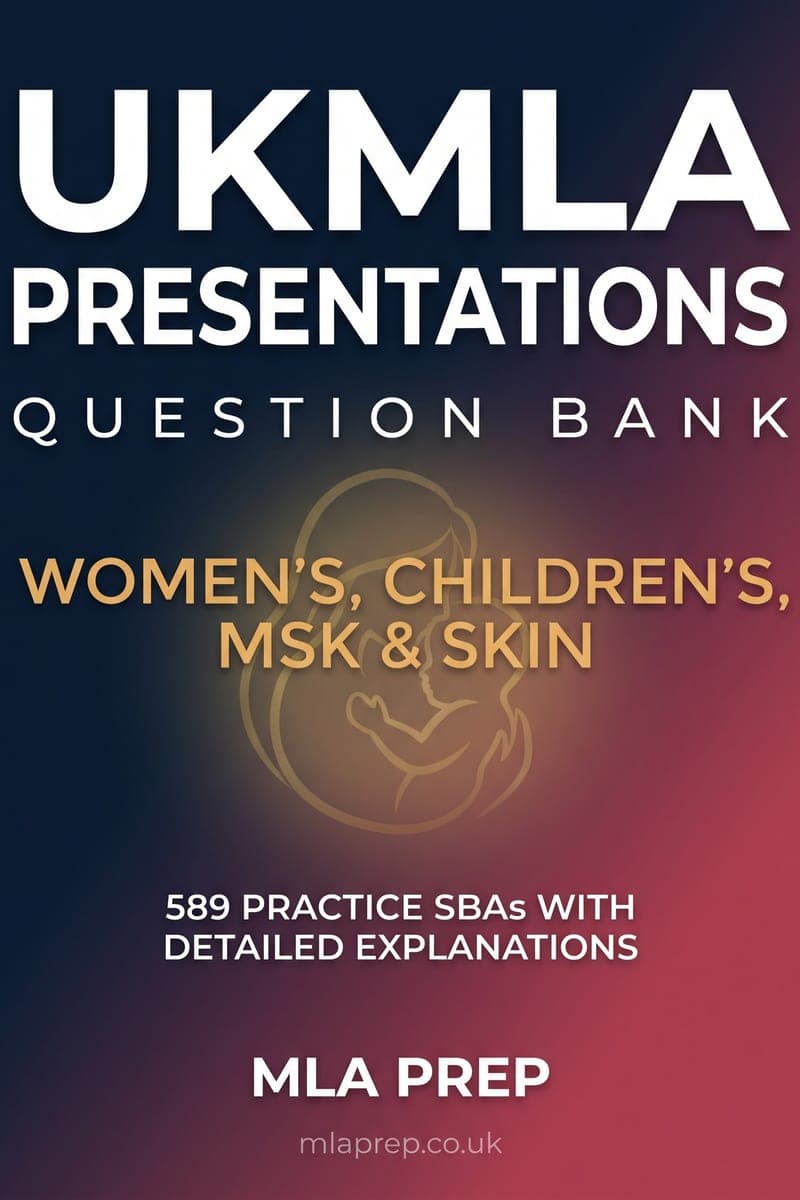
Every Clinical Presentations question-bank volume: 1,993 single-best-answer questions organised by presenting complaint across all 13 UKMLA presentation groups, each answer referenced to NICE and the BNF.

£12.99

All 4 volumes; £19.96 bought separately.

Instant digital download (PDF + EPUB) · all sales final
Complete Clinical Presentations Study Guide: all 4 volumes
Learn

Complete Clinical Presentations Study Guide

220 chapters · 3,098 flashcards

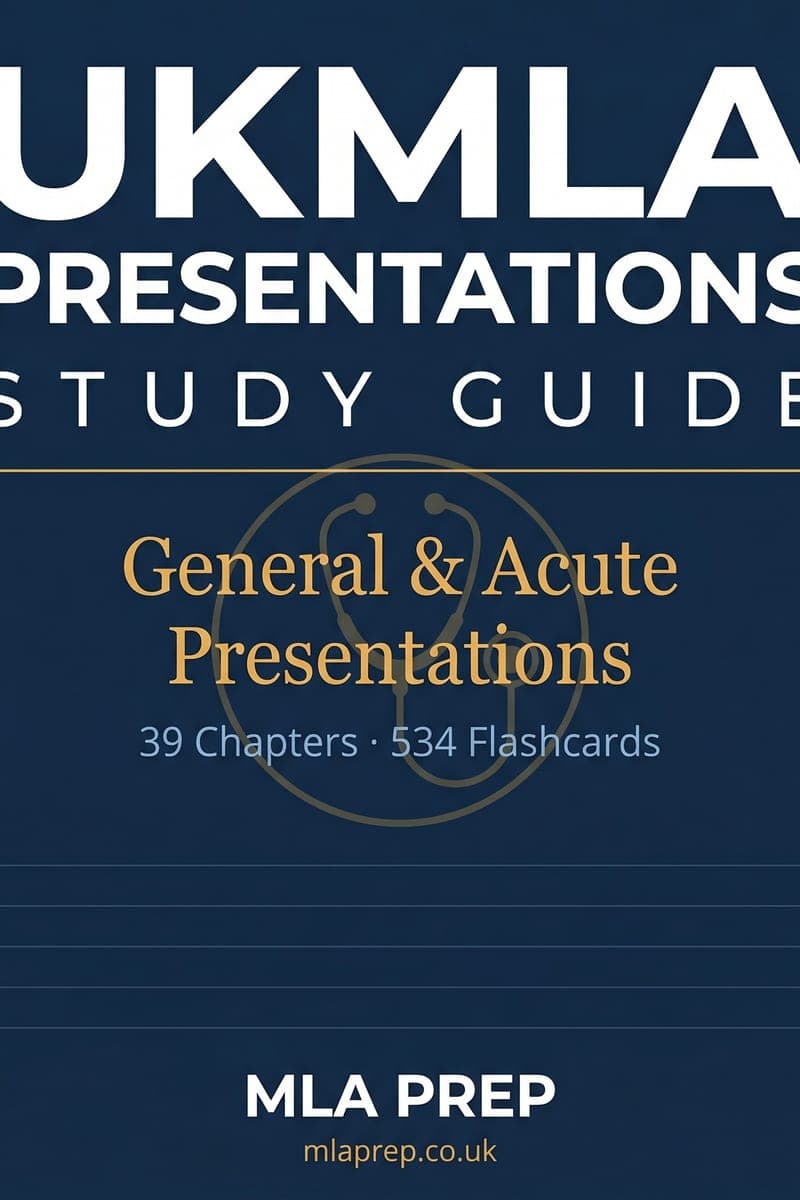
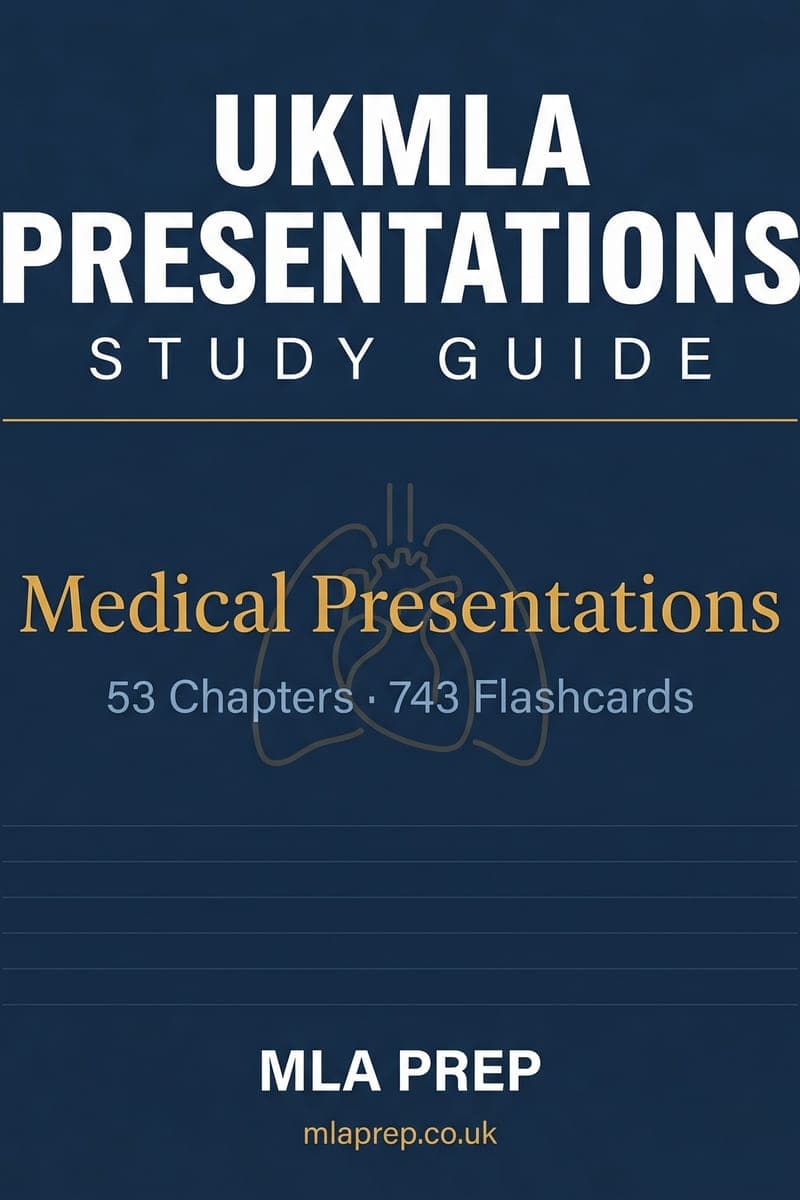
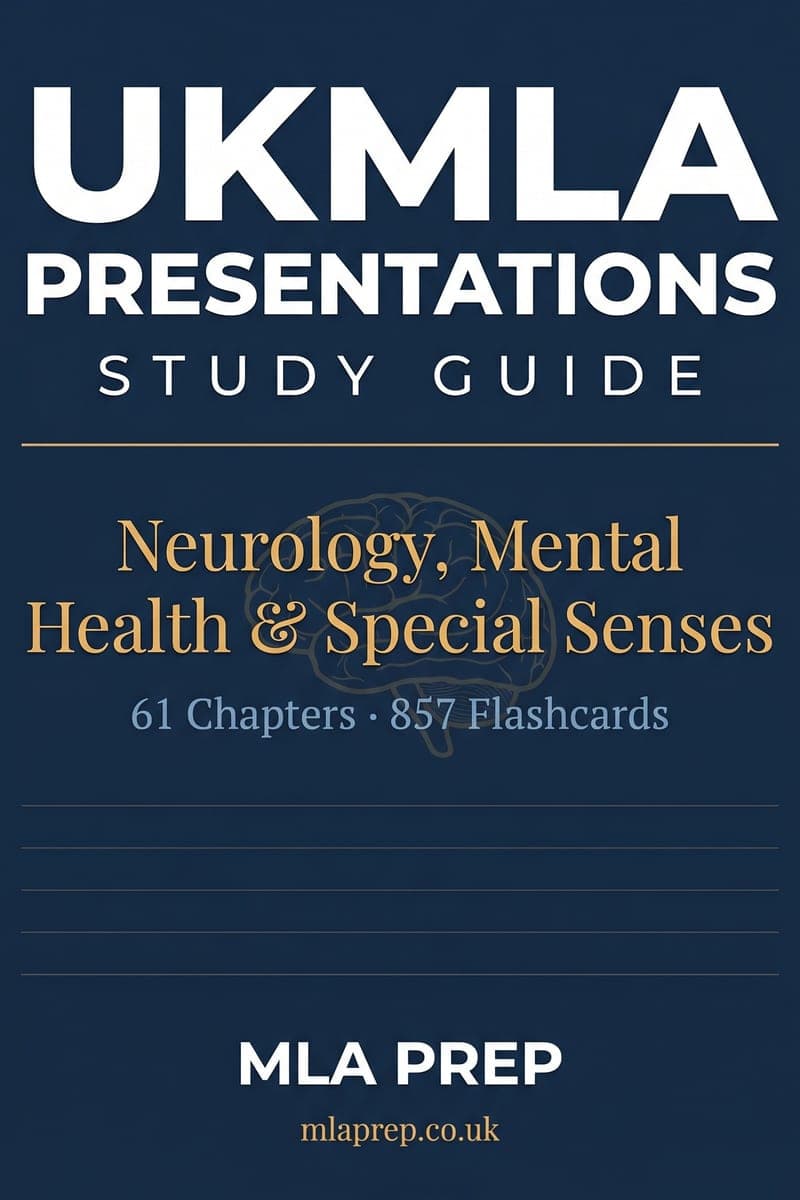
Every Clinical Presentations study-guide volume: presentation-led revision notes across 220 chapters with 3,098 high-yield flashcards, organised by presenting complaint and referenced to NICE and the BNF.

£12.99

All 4 volumes; £19.96 bought separately.

Instant digital download (PDF + EPUB) · all sales final
Look inside

From symptom to diagnosis, on the page.

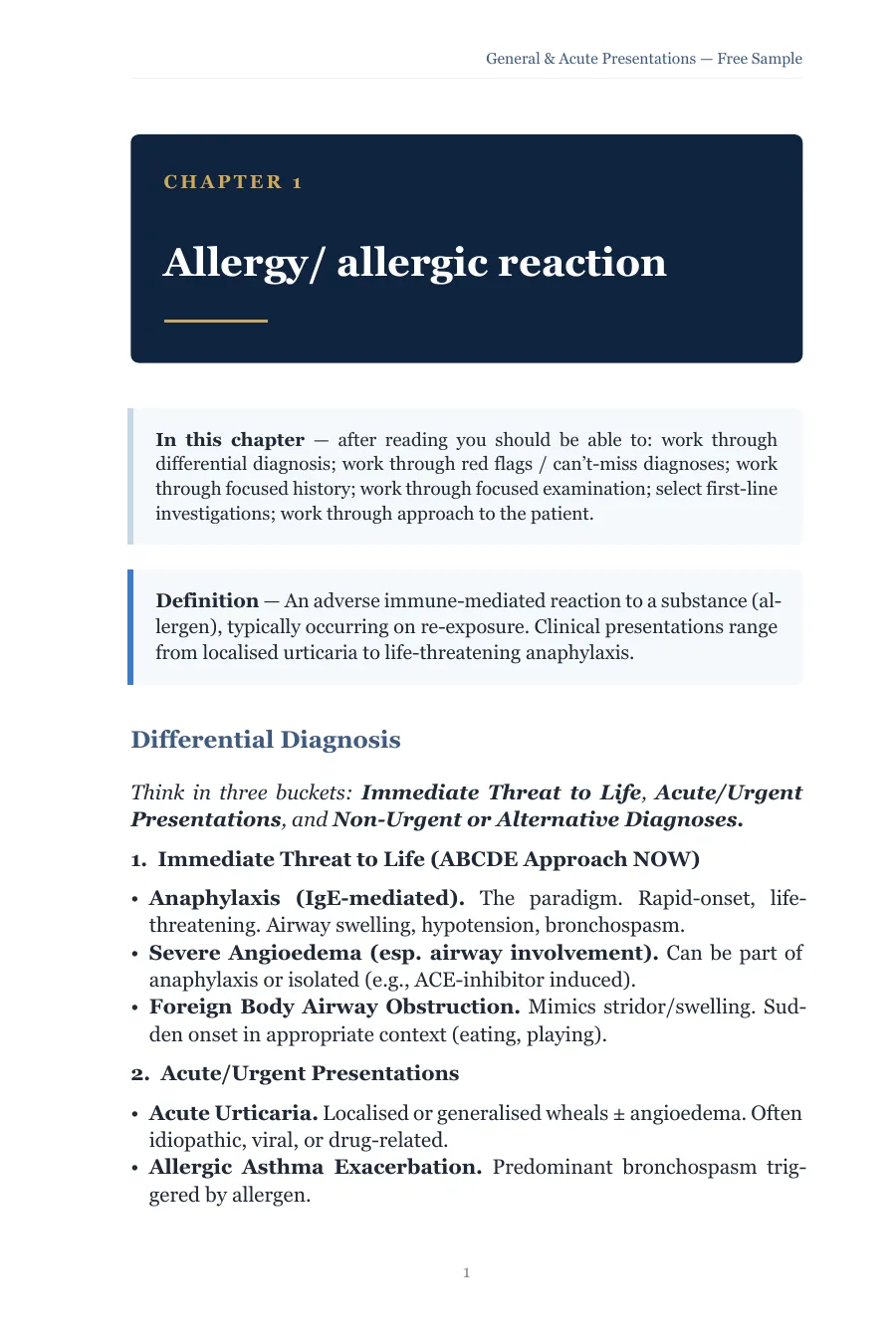
From the General and Acute Presentations samples: a presentation chapter in the Study Guide, its red flags and flashcards, and the matching questions in the Question Bank.

  • Clinical Presentations Study Guide chapter on allergic reaction with objectives, a definition and the differential diagnosis sorted into three groups
    The differential sorted into immediate threats to life, acute problems and the rest.
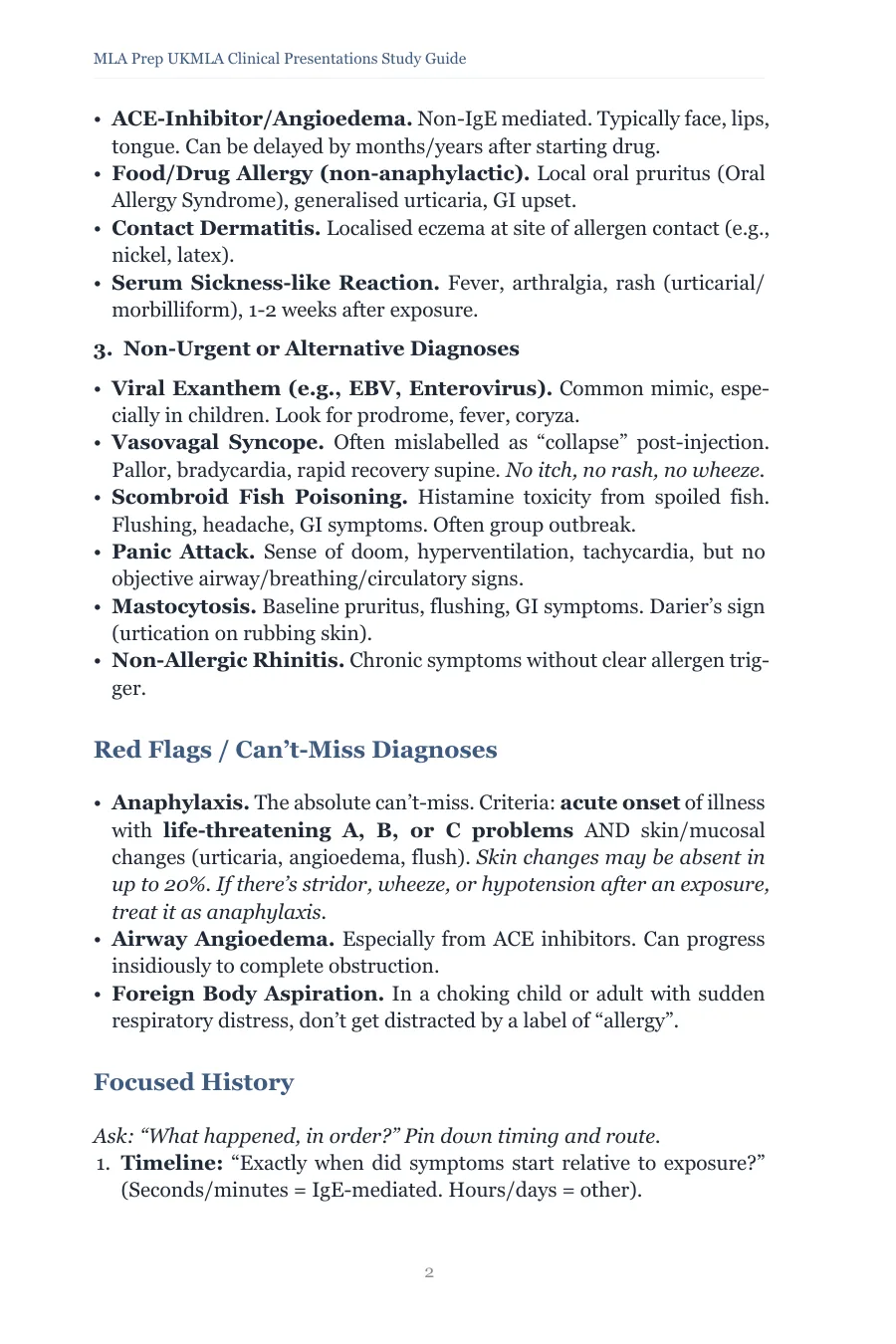
  • Red Flags and Can't-Miss Diagnoses list followed by the focused history questions for an allergic reaction
    Red flags first, then the focused history that separates them.
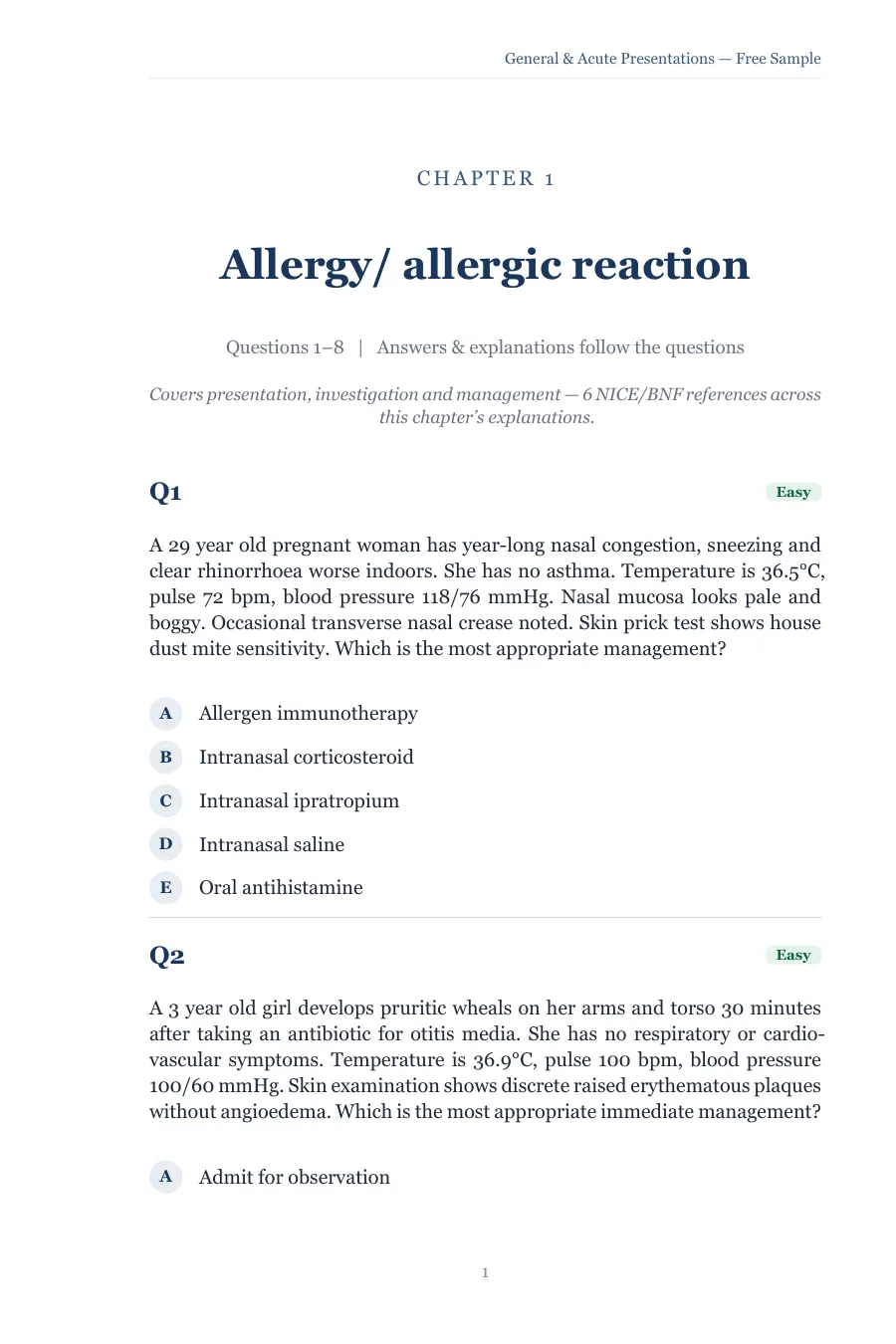
  • Clinical Presentations Question Bank chapter on allergic reaction, with the first two symptom-led SBAs
    A presentation chapter: the vignette leads with the symptom, not the diagnosis.
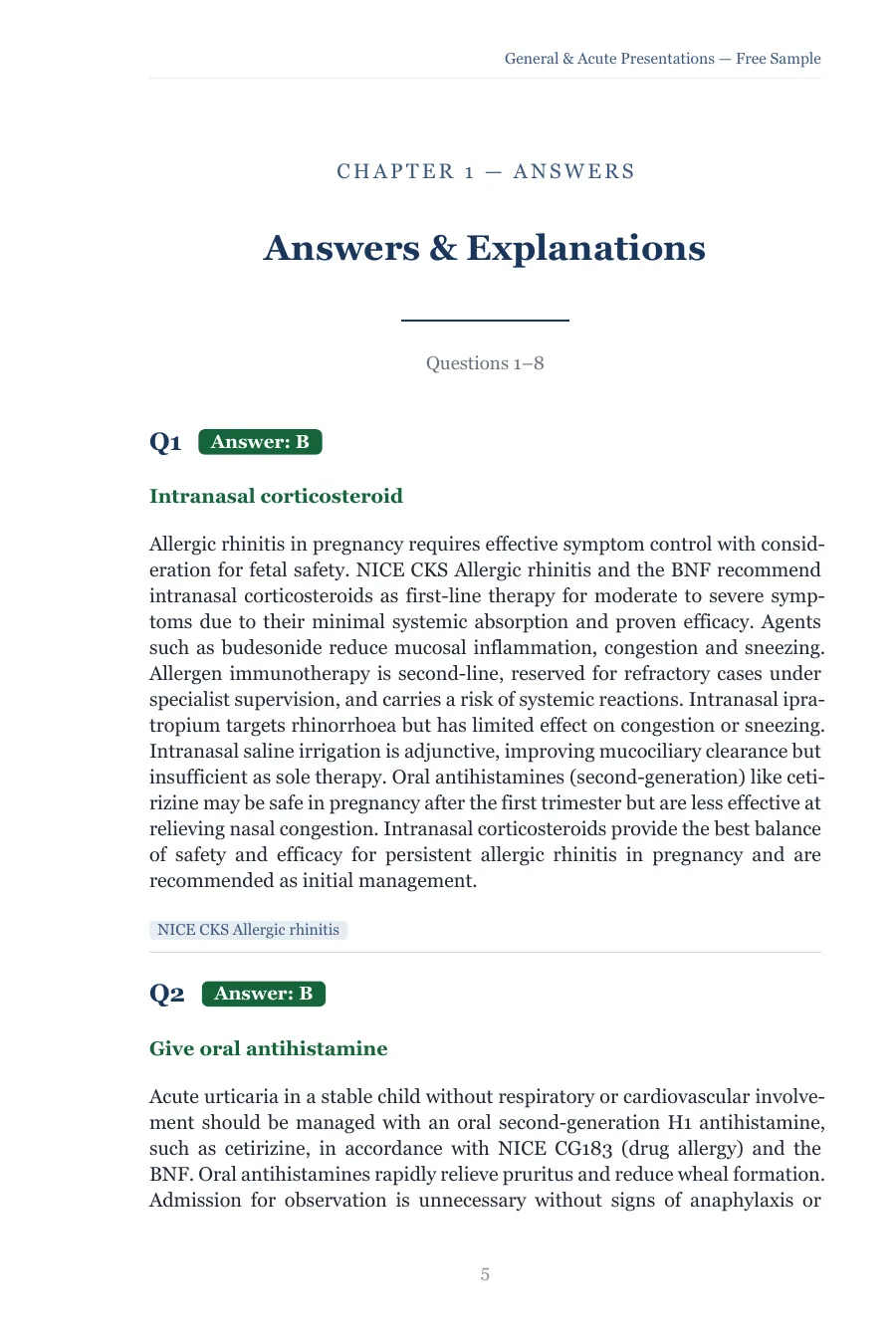
  • Answers and Explanations for the allergic reaction chapter, referencing NICE CKS on allergic rhinitis
    Worked answers for a presentation chapter, referenced to NICE.
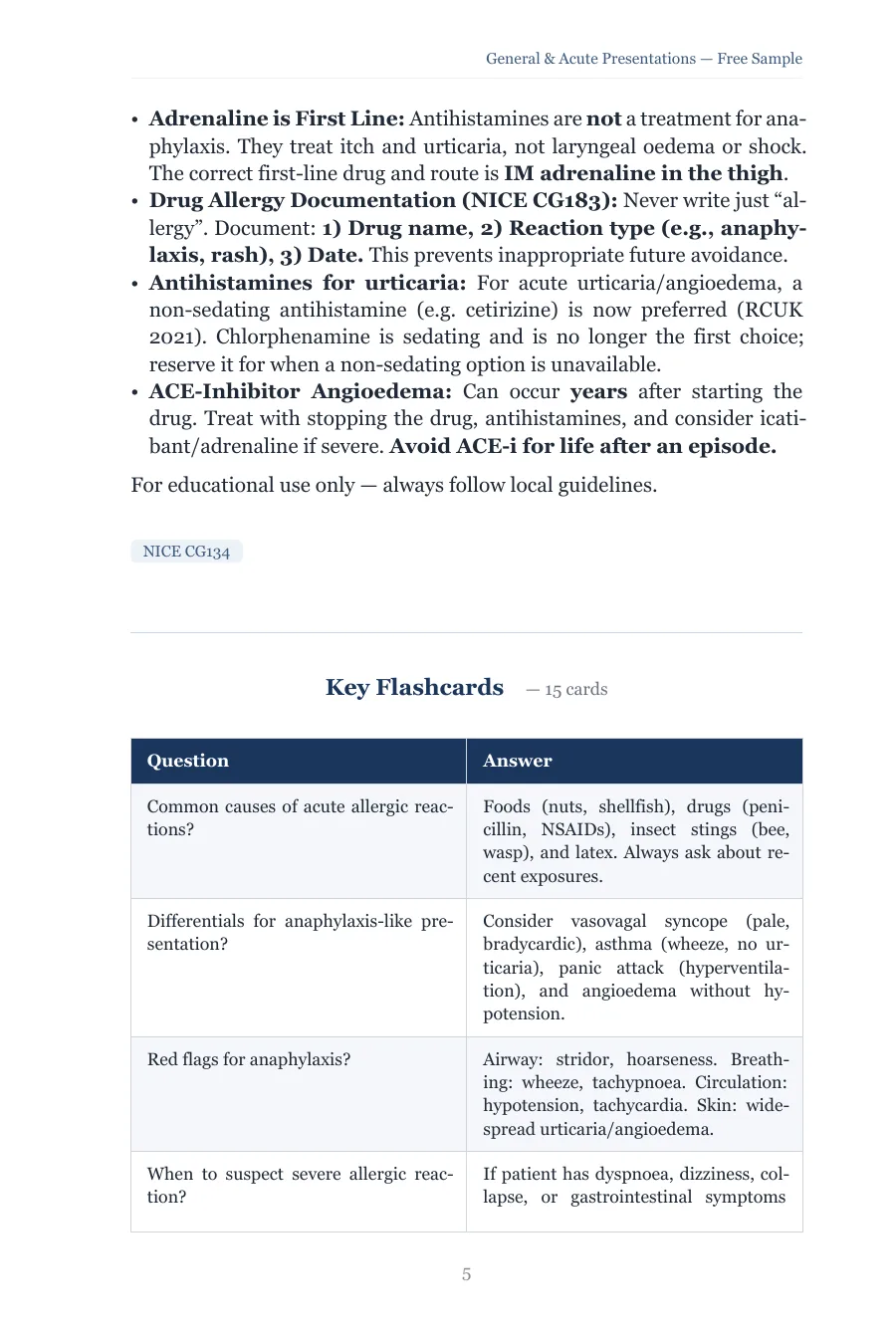
  • High-yield notes on drug allergy documentation followed by the start of the Key Flashcards table
    Documentation points, then the chapter's flashcard table.
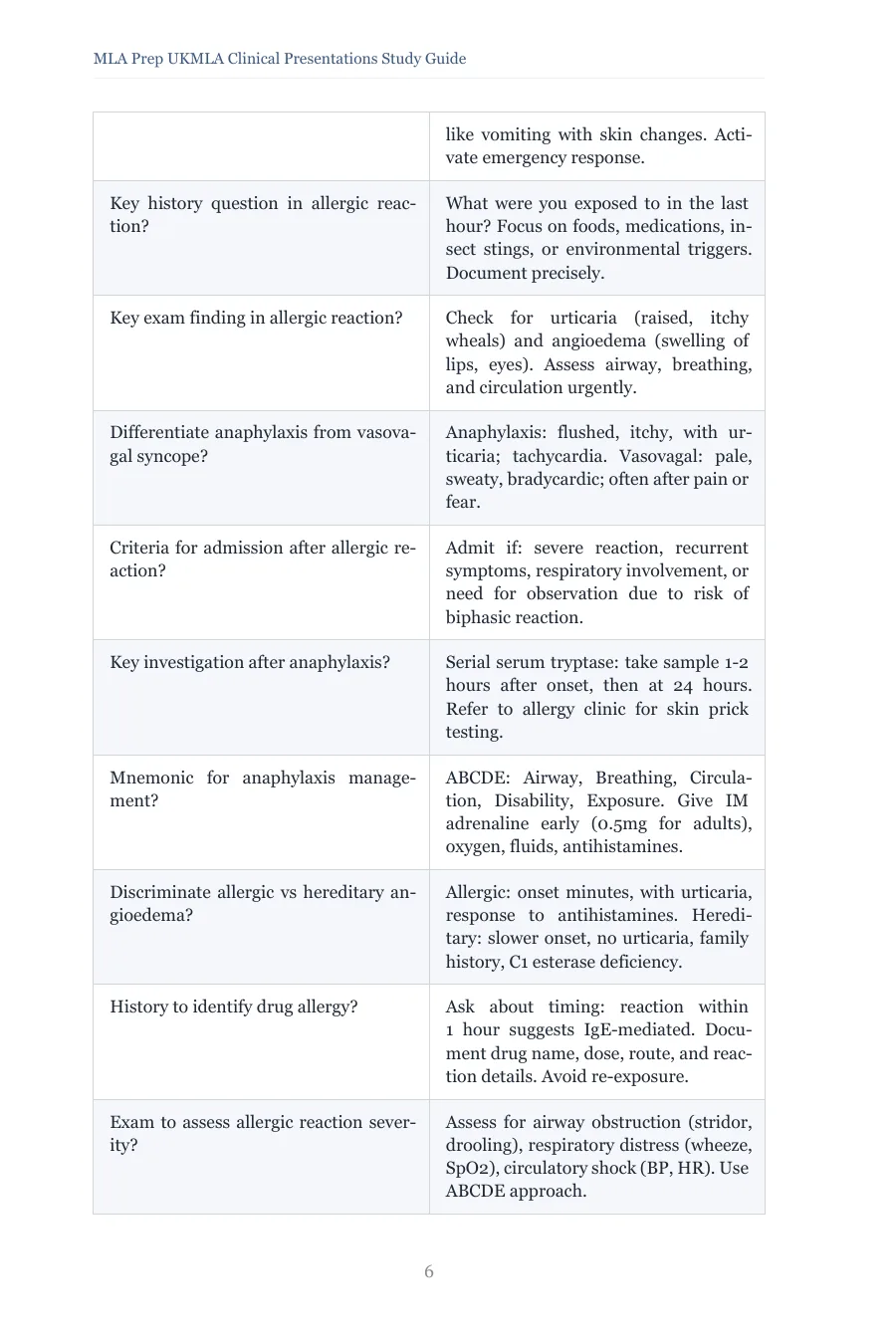
  • Key Flashcards table for the allergic reaction chapter, questions on the left and answers on the right
    The flashcard table for a presentation chapter.
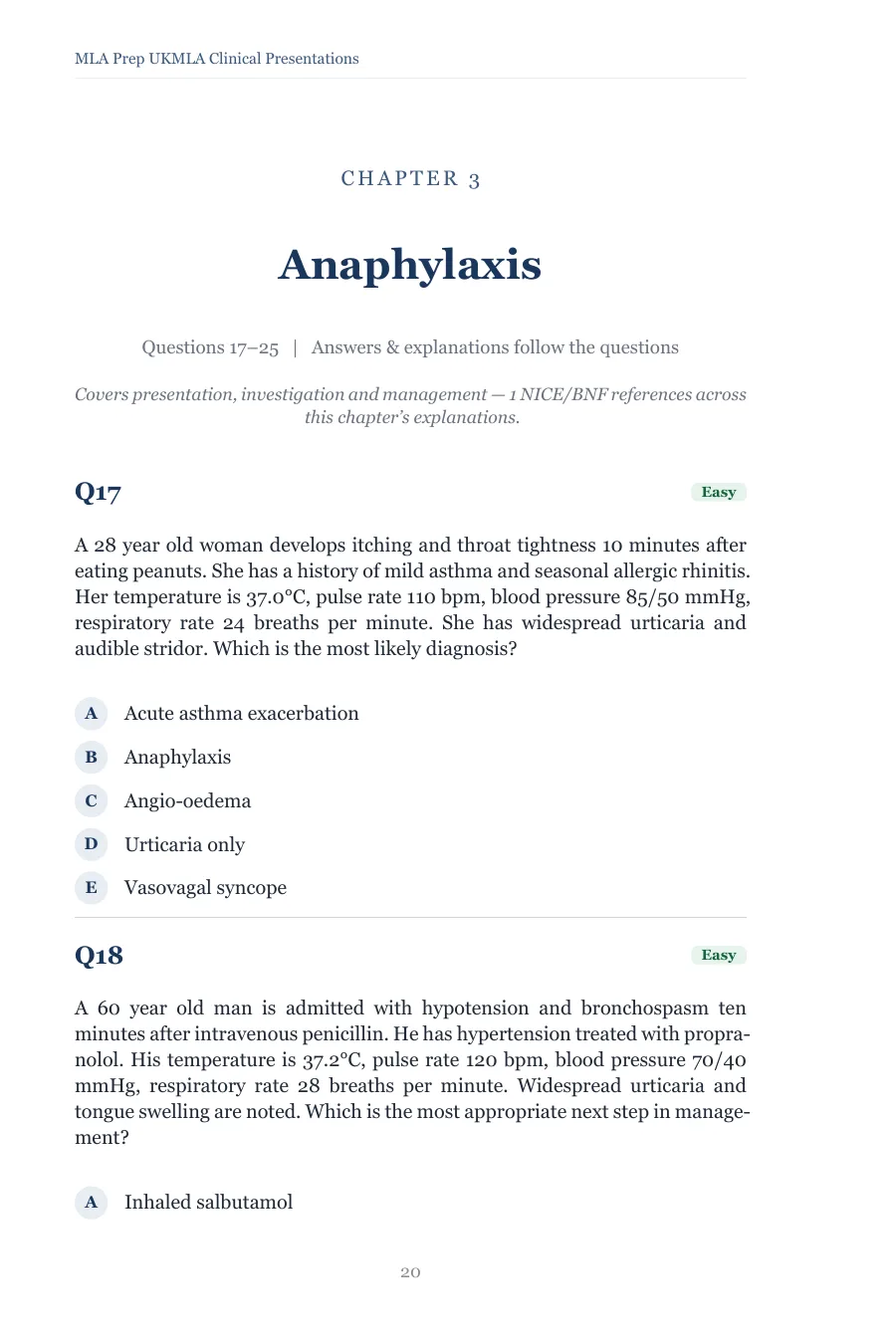
  • Chapter 3, Anaphylaxis: two SBAs, one on a young woman with throat tightness after eating peanuts and one on a child after intravenous adrenaline
    Anaphylaxis, question first: recognise it from the vignette.

How a presentation chapter works

Symptom in, diagnosis out.

  1. Sort the differential into three groups

    Each Study Guide chapter opens by splitting the causes of a complaint into immediate threats to life, acute problems and everything else: the order the exam expects you to think in.

  2. Red flags, then the focused history

    The can't-miss diagnoses come next, with the history and examination findings that separate them, and the first-line investigations.

  3. Then the questions

    The Question Bank volume mirrors the Study Guide chapter for chapter, so every presentation has its own set of SBAs with worked, referenced answers.

Study Guides · 4 volumes

Or revise the approach first.

Presentation-led revision notes: the differential, the red flags, the focused history and examination, then a table of high-yield flashcards at the end of every chapter.

Free samples

Read a presentation chapter first.

One sample per format, cut from the General and Acute Presentations volumes: 25 SBAs with worked answers, or two full chapters of notes with their flashcard tables.

Free sample

Try the Question Bank before you buy.

25 exam-style SBAs with full NICE/BNF-referenced explanations, in the exact format of every volume.

Instant PDF download. Unsubscribe any time.

Free sample

Try the Study Guide before you buy.

Two full chapters of study notes with their flashcard tables, in the exact format of every volume.

Instant PDF download. Unsubscribe any time.

Clinical Presentations FAQ

Before you buy.

What are the Clinical Presentations books?
A UKMLA revision series organised by presenting complaint, the symptom the patient walks in with (chest pain, breathlessness, headache, the unwell child), rather than by final diagnosis. They train the differential-diagnosis reasoning the UKMLA emphasises, and come in both formats: a Question Bank of practice SBAs and Study Guides of notes and flashcards. Learn more →
How is this different from the condition-based Question Bank and Study Guides?
The condition-based series is organised by diagnosis and organ system, for example Cardiovascular Medicine. This series is organised by how patients present, for example chest pain, falls or haematuria. Most students build knowledge by condition, then drill presentations to practise working from symptom to diagnosis under exam conditions.
Do I need these if I already have the condition-based books?
Not for coverage: the topics overlap by design. You want them if your mock errors are recognition errors, where you know the condition but miss it in the vignette. Many students switch to this axis for the last four to six weeks. Learn more →
Which presentation volume should I start with?
General and Acute Presentations if you are early, because its chapters (the unwell patient, fever, falls, shock) recur across every specialty. Otherwise the volume matching your weakest specialty in mocks. Learn more →
Should I get the Question Bank or the Study Guides?
The Question Bank is practice: exam-style SBAs with worked, referenced explanations. The Study Guides are revision notes: the approach to each presentation plus a flashcard table per chapter. They pair well, and each has a complete-set bundle priced below the four volumes bought separately.
What format are the books?
Every purchase includes a PDF and an EPUB. The PDF keeps the typeset page and suits a laptop or tablet; the EPUB reflows to fit a phone or e-reader. You download both straight after checkout, and the link in your email keeps working if you need them again. Learn more →
Can I get a refund?
The books are instant digital downloads, so all sales are final and purchases are non-refundable; by buying, you consent to immediate access at checkout. If a file won't open or you were charged in error, email support@mlaprep.co.uk and we will put it right.

Practise the way the exam asks.

1,993 symptom-first SBAs and 220 presentation chapters, PDF and EPUB, yours to keep.