Revising the UKMLA by presenting complaint
The GMC's MLA content map has two axes: a list of presentations, meaning the symptoms and signs a patient arrives with, and a list of conditions. Nearly every revision resource is organised by condition, so students arrive at the AKT able to recite the management of anaphylaxis and slower at recognising it in a 24-year-old with lip swelling twenty minutes after a meal. Revising by presentation closes that gap. Take one complaint at a time, sort its causes into three groups by urgency, learn the red flags and the few history questions that separate them, then practise SBAs written from the symptom. Four to six weeks of this before the exam is enough for most people.

Two axes, one exam
An AKT item starts with a person and a problem: the age, the setting, the symptom, a few findings, and a question. The diagnosis is the thing you are asked to produce or assume, never the thing you are told. That is the presentations axis of the content map doing its work. Condition-based revision gives you the knowledge; presentation-based revision gives you the retrieval route the exam actually uses.
The two are not rivals. Most students should build knowledge by condition first, because that is how the guidelines and the textbooks are written. The switch to presentations comes late, once you know enough to have something to retrieve.
Sort every differential into three groups
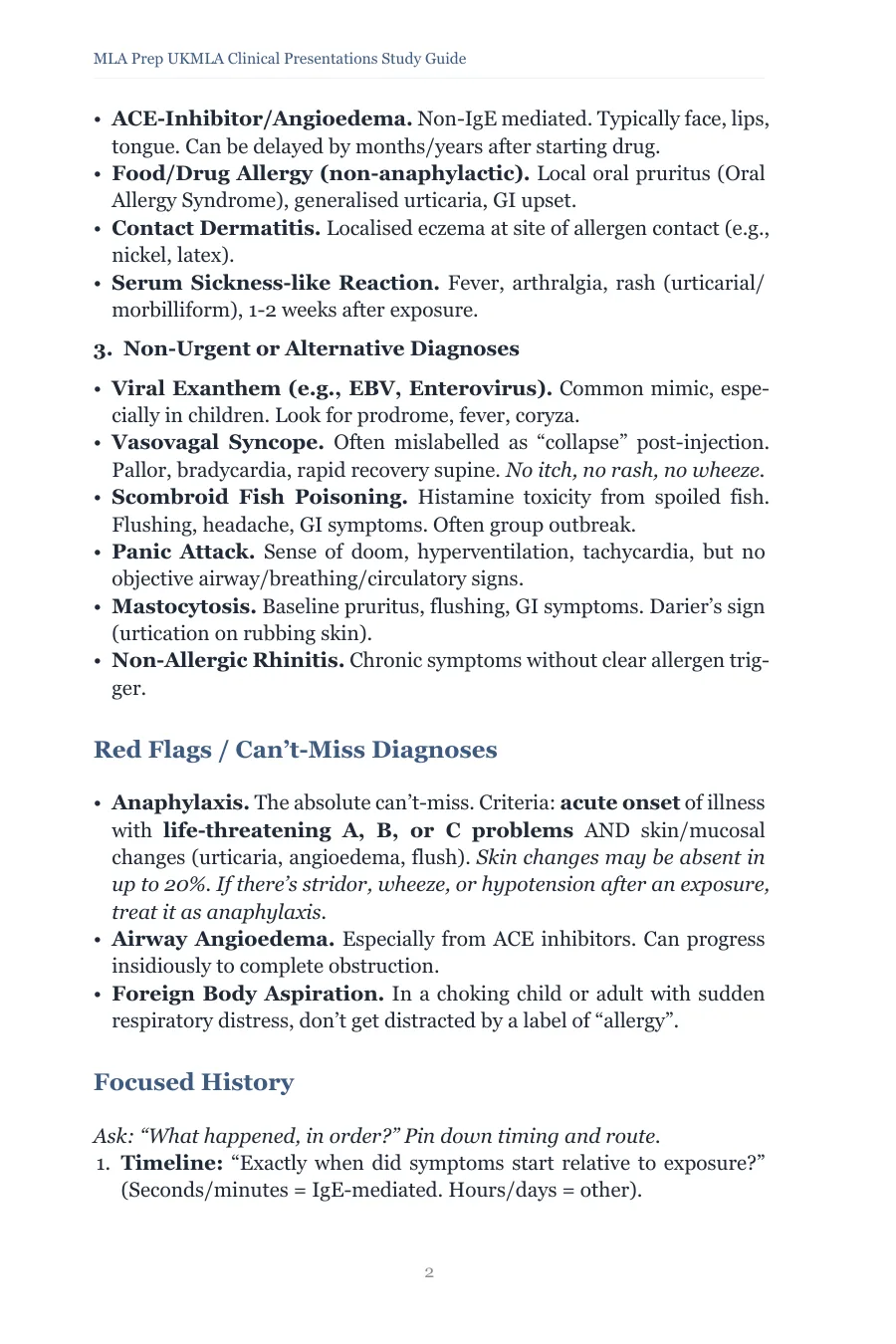
The habit that makes this axis work is a fixed order of thinking. For any complaint, list the causes in three groups: immediate threats to life, which need an ABCDE approach now; acute or urgent problems, which need same-day assessment; and everything else, the non-urgent and the alternative diagnoses. Chest pain sorted this way puts aortic dissection, myocardial infarction, pulmonary embolism and tension pneumothorax in the first group before you have thought about costochondritis at all.
Every chapter of the Clinical Presentations Study Guides opens with the differential in exactly these three groups, then the red flags and can't-miss diagnoses, then the focused history and examination that separate them, then the first-line investigations. The order is the same for all 220 chapters across the 13 presentation groups, so after a dozen chapters the structure is in your head and you apply it to complaints the book never covered.
Red flags first, then the discriminating questions
Red flags are the exam's favourite currency: the single feature in a vignette that changes the answer. Thunderclap onset. Painless jaundice. A child who is drowsy rather than irritable. Learn them per presentation, as a short list you can recite, before you learn anything subtle. Then learn the three or four history questions that split the first group from the rest; the guides phrase these as the questions you would actually ask, in order.
This is also where the presentations series and the condition series meet. The red-flag list for haematuria is short; the management of each cause of haematuria lives in the condition volume for that organ system. Use both, in that order.
Free sample
Try the Study Guide before you buy.
Two full chapters of study notes with their flashcard tables, in the exact format of every volume.
Ready for the full volumes? Browse Clinical Presentations →
Then practise from the symptom
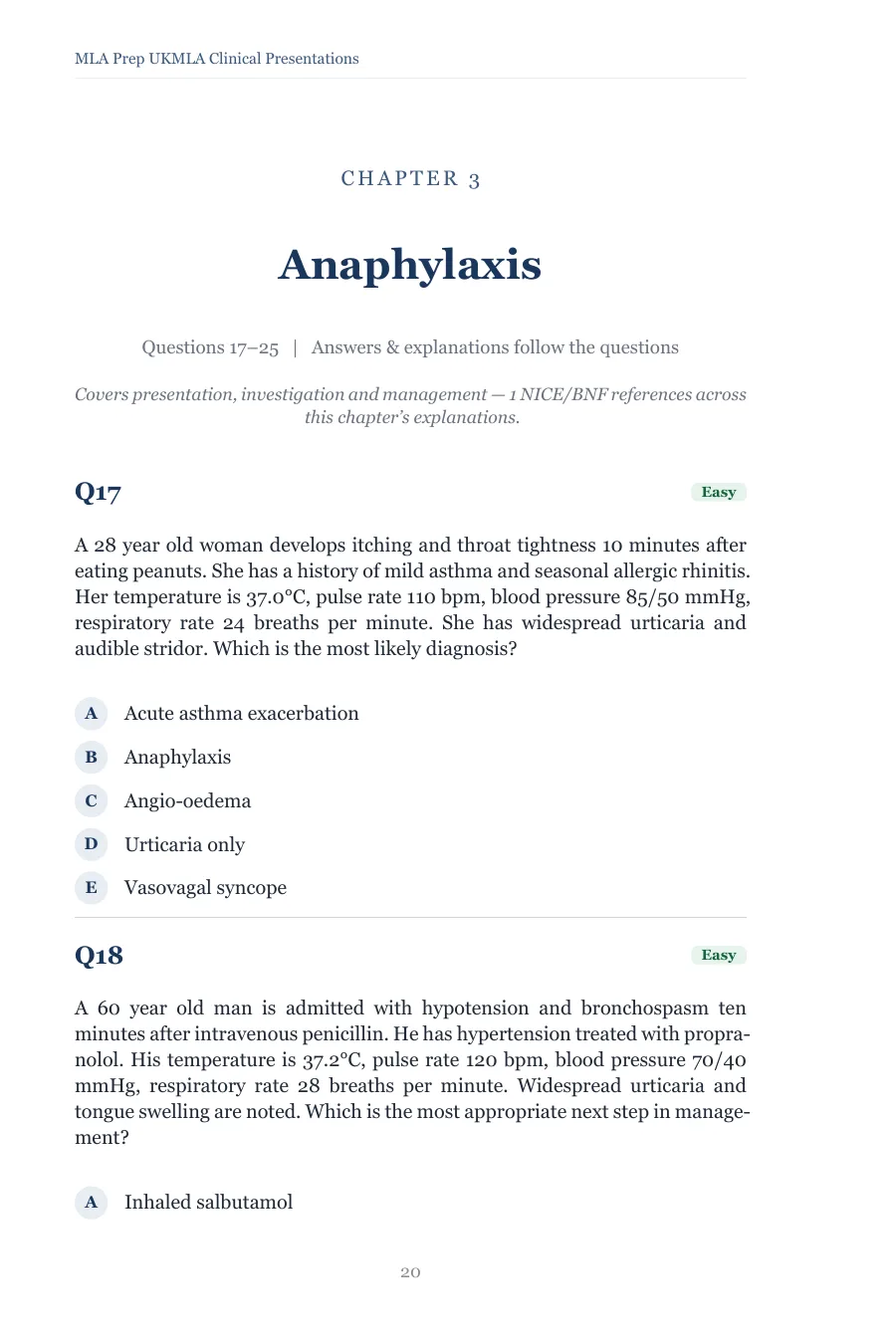
Reading about presentations is comfortable and does not, on its own, change how you answer. The Clinical Presentations Question Bank has 1,993 SBAs written from the complaint, in four volumes that mirror the Study Guides chapter for chapter, so the anaphylaxis chapter in one has an anaphylaxis chapter in the other. Work them in the same loop as any question book: attempt cold, mark from the answers in the same chapter, read every explanation. Watch specifically for recognition errors, where you knew the condition but missed it in the vignette; those are the errors this axis exists to fix.
When to switch axes
A workable plan: condition-based volumes until about six weeks out, presentation-based for the last four to six, with timed mocks throughout to check the switch is helping. If you are starting late, go straight to the General and Acute Presentations volume, because the unwell patient, fever, falls, shock and the deteriorating patient turn up in every specialty's questions, then fill in conditions as the mocks expose them.
Quick answers
- Which presentations should I revise first?
- The general and acute ones: the unwell adult, fever, falls, shock, the deteriorating patient and the unwell child. They appear in every specialty's questions and carry the most red flags per chapter.
- Is presentation-based revision enough on its own?
- No. It teaches recognition and the first steps; the detailed management of each condition still lives in condition-based notes. Most people need both, with presentations taking over in the final month.