How to revise with an SBA question book
Work one chapter at a time. Attempt every question in it cold, at roughly a minute each, before you look at anything. Mark from the Answers and Explanations that start on the next page of the same chapter, then read every explanation, including the ones you got right. Write down each guideline the explanations cite, and come back to the chapter's Hard-tagged questions about a week later. That loop is the whole method; the rest of this guide is why each step is there and how to keep it honest.
Why the chapters are self-contained
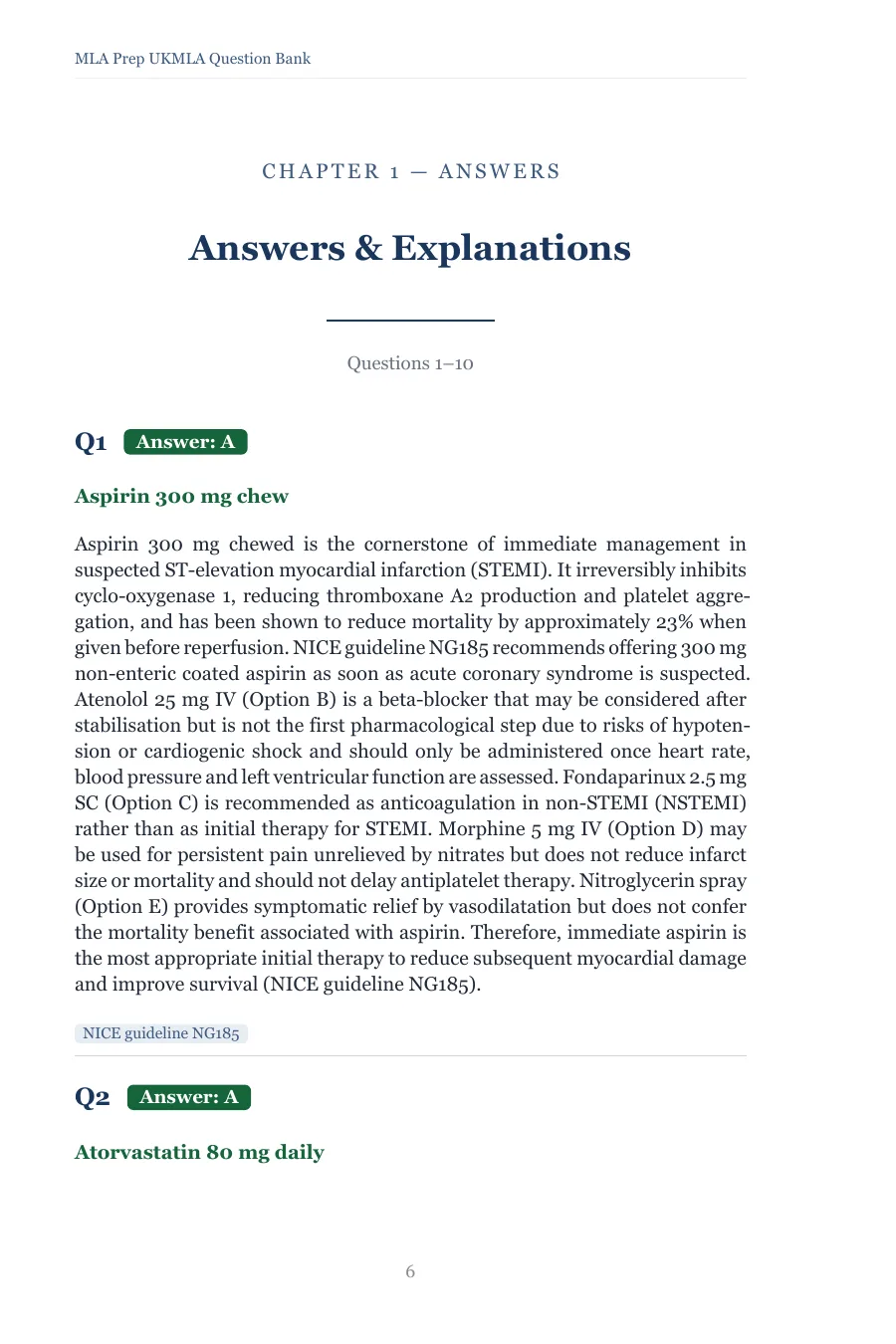
Each chapter in the MLA Prep UKMLA Question Bank is one topic from the GMC content map, with its questions first and its Answers and Explanations on a fresh page in the same chapter. You never turn to the back of the book mid-topic, and the answer to question 3 is never sitting on the facing page while you attempt question 2. The Quick Answer Key at the back exists for a different job: fast marking when you only want the letters.
The practical consequence is that a chapter is a unit of work. Around ten questions, a few pages of explanations and one topic: that fits a 25-minute slot between lectures or a single sitting on a ward computer. Finish the chapter, mark it, read it, close the book. Half-finished chapters are where revision plans go to die.
Attempt at exam pace, not reading pace
The UKMLA AKT gives you 200 single-best-answer questions across two two-hour papers, which works out at a little over a minute per question; PLAB 1 gives you 180 in three hours, a minute each. Whatever you do on the page should be at that pace, because pacing is the skill the exam tests that no amount of knowledge replaces. Read the vignette once, commit to an answer, move on. If you find yourself re-reading a stem three times, note the number and come back after the chapter.
Commit means write the letter down before you look. A pencil mark in the margin, a line in a notebook, anything that stops the quiet "I would have said B" that turns a wrong answer into a phantom right one.
Read the explanation on every question, including the right ones
Marking yourself right or wrong moves nothing. The marks come from the explanation, which walks each of the five options, says why the best answer beats the others and names the guideline behind it. A question you got right by eliminating two options and guessing between the remaining three is a question you still do not know. Reading its explanation costs a minute and fixes that.
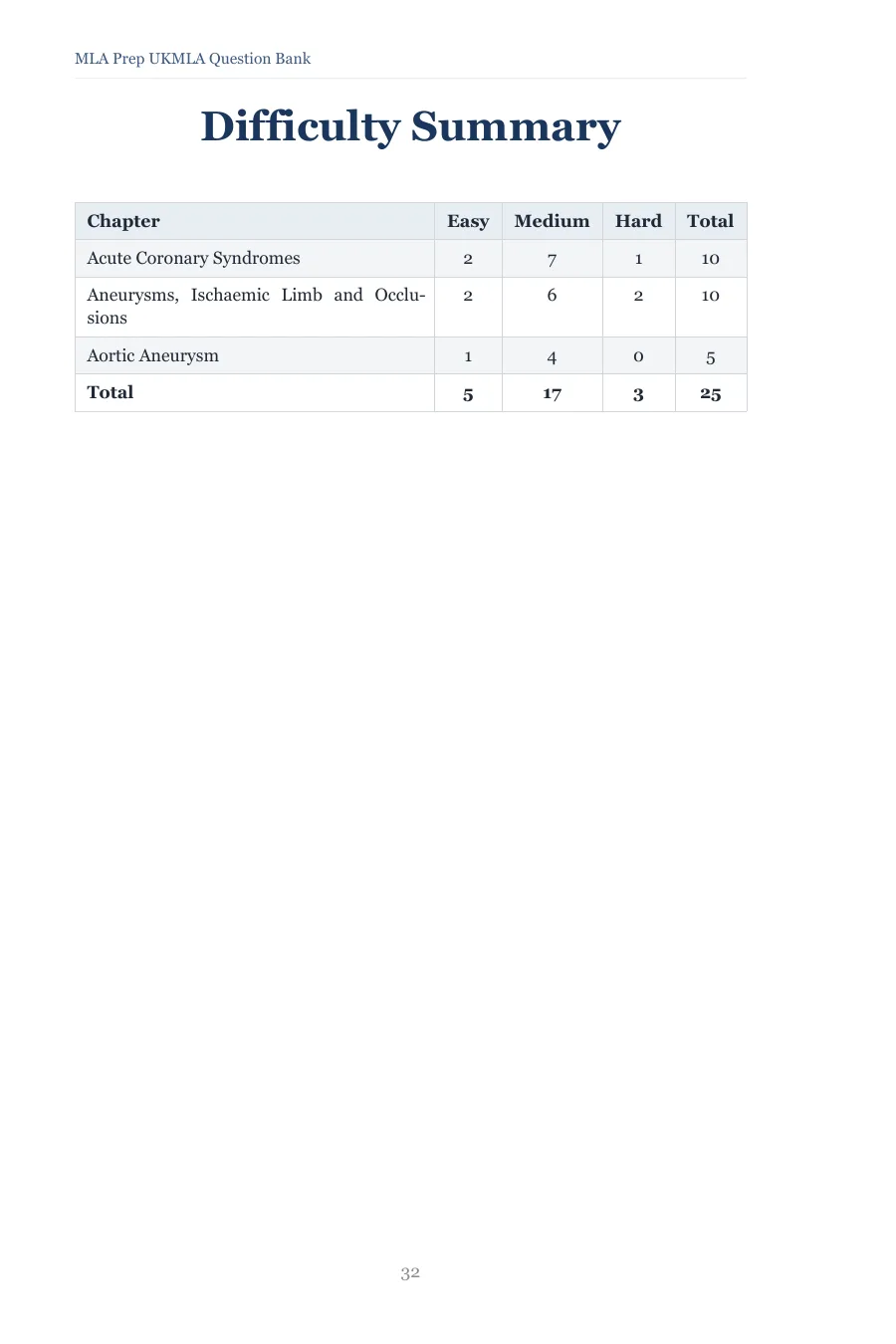
Each question carries a difficulty tag. Easy questions are core knowledge you should get; a wrong Easy answer is a gap to close today. Hard questions are the discriminators, usually a guideline threshold or a second-line decision. Missing those early is normal. The Difficulty Summary table at the back shows the easy, medium and hard counts per chapter, so you can see at a glance where a topic's hard questions cluster.
Turn the citations into a reading list
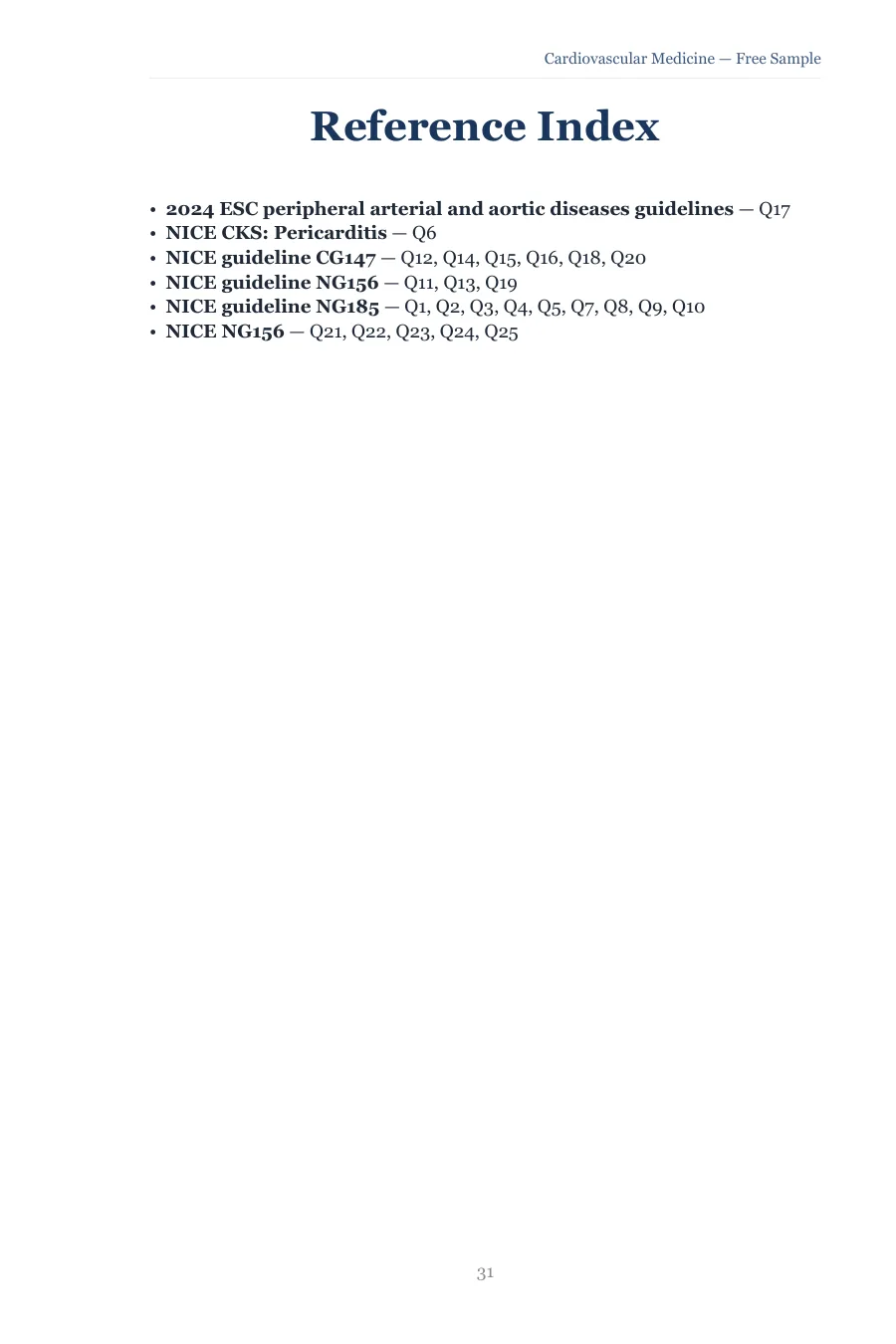
The explanations across the ten volumes index about 1,230 guideline references, mostly NICE guidelines and CKS topics with some specialty guidance such as the ESC and the Resuscitation Council. The Reference Index at the back of each volume lists every one against the questions that rely on it. Use it in reverse: after a chapter, note the guidelines you did not recognise, and open those first. A student who has read NG185 once will answer every acute coronary syndrome question the book can set, and most of the ones the exam can.
Free sample
Try the Question Bank before you buy.
25 exam-style SBAs with full NICE/BNF-referenced explanations, in the exact format of every volume.
Ready for the full volumes? Browse the Question Bank →
Where the book fits with the rest of your revision
A question book is a measuring instrument as much as a teaching one. Pair it with notes for the topics it exposes: the matching Study Guide series has the same ten volumes and the same chapters, so the chapter you just marked has a chapter of notes with the same name. For timing under real conditions, the books cannot run a clock for you; a timed paper on unseen questions is what the app's mock mode and the free 50-question diagnostic are for.
The chapter loop, step by step
Pick the chapter. Start with your weakest specialty's volume, or the topic your last mock flagged. One chapter per sitting.
Attempt every question cold. About a minute each, answers written down before you look.
Mark from the same chapter. Answers and Explanations follow the questions; the Quick Answer Key at the back is for speed.
Read every explanation. Right answers included. Note which distractor tempted you and why the best answer beats it.
Log the guidelines. Write down each reference you did not recognise, and read its summary before the next chapter.
Return in a week. Re-attempt the Hard-tagged questions and anything you got wrong. If they fall the second time, move on.
Quick answers
- How many questions a day should I do from the book?
- One chapter per sitting, which is usually around ten questions plus their explanations, and one or two sittings a day in term time. Ten questions read properly beat forty rushed ones; the reading is where the marks come from.
- Should I write my answers in the file?
- Keep answers on paper or in a notes app rather than annotating the PDF, so the chapter stays clean for a second attempt. Annotate the explanations instead: those are the pages you will re-read.